
Assembly adhesive applications and processing - tips for strong bonds
Posted on May 11, 2026
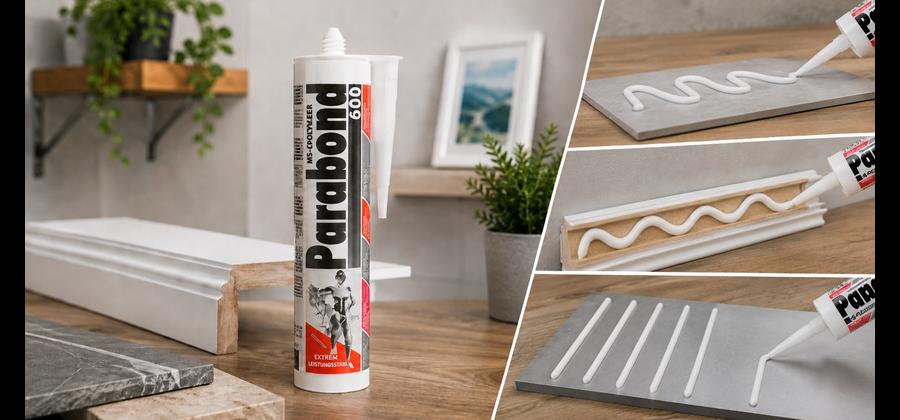
Assembly adhesives enable fast, strong and clean bonding on a wide range of materials - without drilling or screws. Whether skirting boards, tiles, aluminium composite panels or decorative elements: with the right assembly adhesive and correct processing, many applications can be implemented permanently and reliably.
Assembly adhesive enables many components to be fastened without visible screws or nails. Depending on the product, skirting boards, wall panels, tiles, wood-based materials, aluminium composite panels or other suitable materials can be bonded to load-bearing substrates.
In this blog, we show which materials can be bonded with assembly adhesive, how substrates are prepared and how the adhesive is applied correctly. We also explain how to process MS polymer assembly adhesives, important points during curing and typical bonding mistakes.
What is assembly adhesive and when is it useful?
Assembly adhesives are used to permanently join components to each other or to a substrate. They are particularly useful where visible fasteners should be avoided or surfaces should not be interrupted by screws and drill holes.
- No visible screws: The fastening remains hidden behind the component.
- Many materials: Depending on the adhesive, wood, mineral building materials, metals and various plastics can be bonded.
- Stress compensation: Elastic adhesives can accommodate small movements between different materials.
- Indoor and outdoor use: Suitable products can also be used for weather-exposed applications.
- No drill holes: Mechanical fastening can be avoided in suitable applications.
Important: Not every assembly adhesive is suitable for every material and every application. The decisive factors are the adhesive approvals for the substrate, intended use and occurring loads.
Suitable assembly adhesives are available directly from S-Polytec.
Which materials can be fastened with assembly adhesive?
The adhesion of an assembly adhesive depends on the adhesive, material surface and substrate. Before application, always check whether the product used is approved for the respective material combination.
| Material | Typical application | What to consider |
|---|---|---|
| Wood and MDF | Skirting boards, wall cladding and furniture parts | The surface must be sound and free from dust and loose particles. |
| Tiles and ceramics | Cladding and installation on smooth surfaces | Clean the surface thoroughly and check adhesive suitability for non-absorbent substrates. |
| Stone and concrete | Components on mineral substrates | Remove loose, sandy or unsound areas beforehand. |
| Aluminium composite panels | Wall panels, cladding and signs | The adhesive must suit the panel, substrate and intended use. |
| HPL sheets | Cladding and interior construction | Adapt surface preparation and adhesive system to the application. |
| PVC and other plastics | Sheets and components in interior finishing | Check material compatibility of the adhesive in advance. |
Further information about the sheet materials mentioned can be found with our aluminium composite panels, HPL sheets and PVC sheets.
What characterises MS polymer assembly adhesive?
MS polymer adhesives are used for numerous assembly applications. They combine good adhesion on many suitable substrates with an elastic adhesive joint.
- Elastic joint: Movements between different materials can be accommodated to a limited extent.
- High initial adhesion: Depending on the product, components can already be positioned securely during installation.
- Broad range of applications: Suitable for numerous materials and construction applications.
- Indoor and outdoor: Appropriately approved products can also be used outdoors.
- Moisture-curing: Many MS polymer adhesives cure under the influence of moisture.
Observe product data: Initial adhesion, skin formation time, curing speed and permitted temperature range differ depending on the adhesive.
Prepare the substrate correctly for assembly adhesive
The quality of the adhesive bond depends significantly on the surface. The adhesive can only bond as reliably as the layer to which it is applied.
- Check load-bearing capacity: Sandy, crumbling or loose surfaces are not suitable bonding bases.
- Remove dust: Thoroughly clean bonding surfaces of dust and loose particles.
- Remove grease and oil: Degrease surfaces according to the adhesive specifications.
- Remove loose coatings: Completely remove unsound paint or other layers.
- Observe moisture: Substrate conditions must comply with the adhesive processing specifications.
- Check material compatibility: Test sensitive surfaces first in an inconspicuous area.
Decisive: If an unsound coating or the top material layer detaches from the substrate, even a very high-performance adhesive cannot create a permanently stable connection.
Process assembly adhesive correctly
A durable bond results from the combination of a suitable material pairing, a clean surface, correct adhesive application and sufficient curing.
1. Prepare the bonding surfaces
Both surfaces must be clean, sound and suitable for bonding according to the product specifications. Dirt, dust, grease and loose particles must be removed before bonding.
2. Apply assembly adhesive
Depending on the application, the adhesive is applied, for example, in beads or individual adhesive dots. Application and adhesive quantity must suit the component size, surface and adhesive used.
3. Position the component
Align the component within the specified processing time and place or press it evenly against the substrate.
4. Fix the component
If the adhesive cannot yet safely support the component's own weight during curing, the position must be temporarily secured against slipping.
5. Wait for curing
Only load the adhesive joint once the assembly adhesive used has cured sufficiently. The respective product specifications are decisive.
Processing: Temperature, humidity, adhesive quantity and joint cross-section can affect curing time.
Apply assembly adhesive in dots or beads?
With many assembly adhesives, the adhesive is not spread over the entire surface but applied in beads or individual adhesive dots. The correct application method depends on the adhesive, component and application.
| Application method | Characteristic | Typical use |
|---|---|---|
| Adhesive beads | Continuous adhesive areas with gaps | Larger components and elongated elements |
| Adhesive dots | Point-based distribution of adhesive | Smaller components or applications with several defined bonding points |
| Full-surface application | Large closed adhesive area | Only use if the adhesive system employed is intended for it |
Moisture-curing adhesives: With MS polymer and other moisture-curing systems, the construction must allow sufficient curing of the adhesive. Unsuitable full-surface application between two dense materials can significantly affect through-curing.
Fix assembly adhesive and allow it to cure
High initial adhesion is not the same as complete curing. During installation, an adhesive may already hold a component well even though the adhesive joint has not yet reached its final load capacity.
- Secure the component: Additionally fix heavy or slip-prone parts during curing.
- Do not load too early: Only stress the adhesive joint after sufficient curing.
- Observe temperature: Work only within the permitted processing temperature range.
- Observe joint cross-section: Larger adhesive quantities may require longer for complete through-curing.
- Follow product data: Refer to the relevant technical data sheet for processing and curing times.
Practical example: fastening wall panels with assembly adhesive
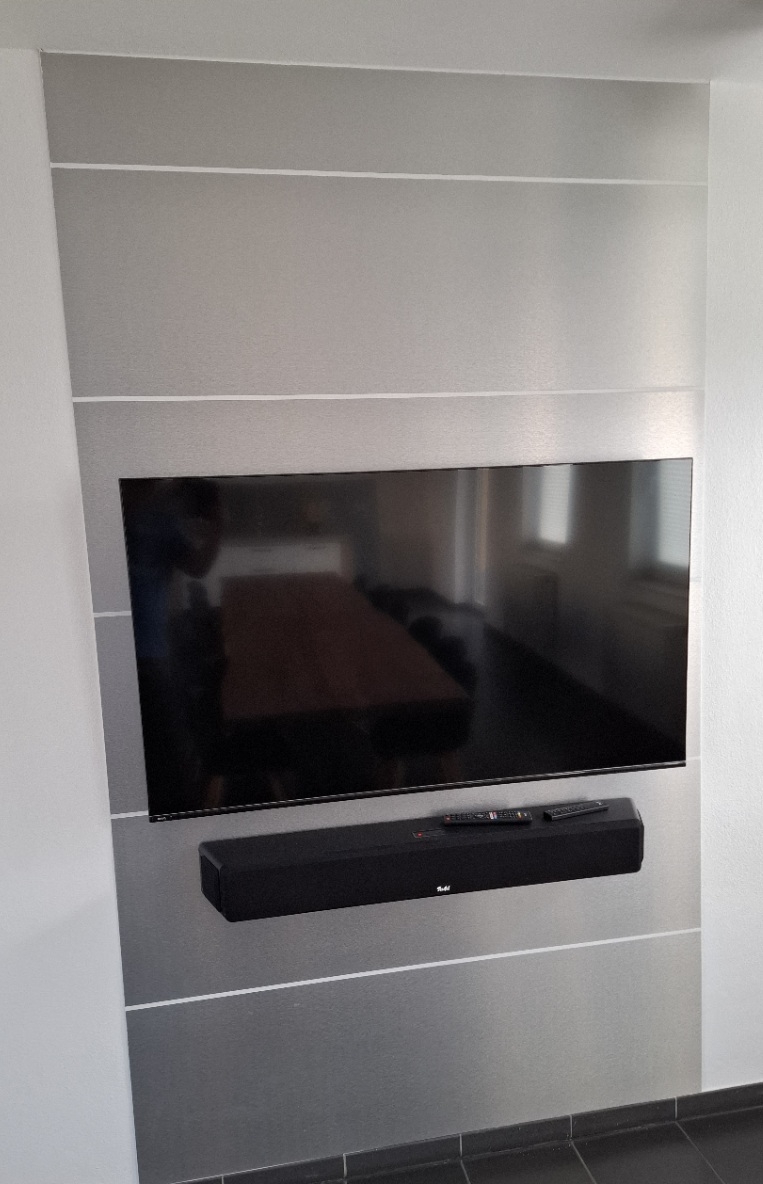
In this project, brushed aluminium composite panels were fastened as decorative wall panels. Bonding enables installation without visible screws on the front and preserves the uninterrupted appearance of the surface.
An elastic MS polymer-based assembly adhesive is used. A sound substrate, clean preparation and secure fixing of the panels during curing are particularly important.
Required materials
- MS polymer assembly adhesive: for the actual adhesive bond.
- Cartridge gun: for controlled adhesive application.
- Aluminium composite panels: as decorative wall panels.
More about the material: We explain the detailed bonding specifically for aluminium composite panels in the blog Bonding aluminium composite panels.
Remove fresh assembly adhesive
Adhesive residues should ideally be removed while the assembly adhesive is still fresh. Once fully cured, many assembly adhesives can only be removed mechanically.
- Act quickly: Remove fresh adhesive residues as soon as possible.
- Observe product data: Only use cleaners recommended for the adhesive.
- Consider the surface: Cleaning agents must also be compatible with the adjacent material.
- Test first: Check sensitive or unknown surfaces in an inconspicuous area.
Take care with acrylic glass: With acrylic glass made from PMMA, solvent- or alcohol-containing cleaners must not be used indiscriminately. Unsuitable cleaners can damage the surface or promote stress cracking.
Common mistakes when processing assembly adhesive
- Substrate not checked: Adhesive is applied to loose, sandy or unsound surfaces.
- Bonding surface contaminated: Dust, grease or oil can significantly reduce adhesion.
- Wrong assembly adhesive: The product is not intended for the material, substrate or application.
- Too little adhesive: Unevenness or required bonding areas are not bridged sufficiently.
- Unsuitable application: The application method does not suit the adhesive or component.
- Component not fixed: The bonding surface shifts during curing.
- Loaded too early: The joint is stressed before the adhesive has cured sufficiently.
- Processing temperature ignored: The assembly adhesive is used outside the intended temperature range.
Advantages of assembly adhesive
- Concealed fastening: No visible screws or nails on the component surface.
- Less drilling: Drilling and plugging can be avoided in suitable applications.
- Versatile applications: Depending on the product, usable for numerous building materials and materials.
- Elastic adhesive joint: Elastic systems can accommodate limited movements and stresses.
- Clean appearance: Especially with wall panels, cladding and signs, fastening points remain invisible.
Not always the best solution: For heavy, safety-relevant or highly wind-loaded components, it must be checked whether an adhesive bond alone is sufficient or whether mechanical securing is required.
Use assembly adhesive correctly: the key points summarised
Assembly adhesives enable clean and concealed fastening on numerous suitable materials. For reliable bonding, however, not only the adhesive strength of the product but above all the substrate, material compatibility and processing are decisive.
A sound and clean bonding surface, adhesive application suitable for the application and sufficient fixing and curing time are particularly important.
Suitable MS polymer assembly adhesive is available directly from S-Polytec.
Frequently asked questions about assembly adhesive
Which materials does assembly adhesive bond to?
That depends on the specific product. Suitable assembly adhesives can, for example, be used on wood, mineral building materials, metal, tiles and various plastics. The adhesive's material approvals are decisive.
How long does assembly adhesive need to dry?
Curing time depends on the product and application. Adhesive quantity, joint cross-section, temperature and humidity can influence through-curing. The specifications of the assembly adhesive used are therefore decisive.
Does assembly adhesive bond to tiles?
Many assembly adhesives can be used on tiles if the product is suitable for smooth or non-absorbent substrates. The surface must be clean and prepared according to the product specifications.
Is assembly adhesive suitable for outdoor use?
There are assembly adhesives specifically intended for outdoor applications. The decisive factors are the product approvals regarding moisture, weather, temperature and the materials to be bonded.
Does a bonded component need to be fixed during curing?
If the adhesive's initial adhesion is not sufficient to hold the component safely in position, it must be additionally secured against slipping or sagging until sufficient curing has occurred.
Should assembly adhesive be applied in dots or beads?
The correct application method depends on the adhesive and application. Assembly adhesives are often applied in beads or dots. With moisture-curing systems, sufficient through-curing of the adhesive joint must also be possible.
Can aluminium composite panels be fastened with assembly adhesive?
Yes, aluminium composite panels can be fastened with an approved assembly adhesive in suitable applications. The substrate, panel size, intended use and occurring loads must suit the adhesive joint.
Category Usage tips
- Aluminium composite panel installation guide: fastening, applications & tips for indoors and outdoors
- Aluminium construction profiles: applications, planning and accessories
- Assembly adhesive vs. drilling – which fastening method is the better choice?
- Avoid root damage by using root barriers
- Bonding acrylic glass – adhesives, preparation and instructions