
Polishing acrylic glass: remove scratches & restore clarity
Posted on Jul 22, 2026
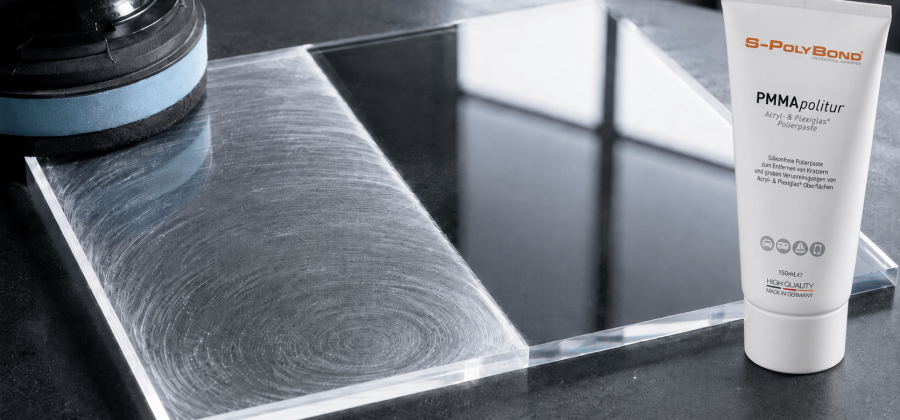
Fine scratches, matt areas or dull acrylic glass surfaces? In this blog, we explain how to clean and polish acrylic glass correctly and restore its clarity with a suitable PMMA polishing paste.
Polishing acrylic glass is worthwhile when fine scratches, matt areas or dull surfaces affect its clear appearance. In this blog, we explain how to clean and polish acrylic glass correctly and restore it with a suitable PMMA polishing paste.
Polishing acrylic glass – when is it worthwhile?
Polishing acrylic glass is particularly useful when the damage is mainly confined to the surface. This may be the case when an acrylic sheet has developed fine scratches as a result of cleaning, dust, light mechanical wear or weather exposure. Matt or dull areas on smooth acrylic glass surfaces can also often be visibly restored.
Polishing is especially relevant for smooth acrylic glazing, transparent protective screens and acrylic sheets that have become matt through cleaning, dust or use. Care must be taken with intentionally matt or satin acrylic glass, however, because polishing can alter the matt surface effect.
Example: A smooth acrylic glass pane with fine wiping scratches can often be polished successfully. A satin acrylic sheet should not simply be polished across its entire surface, as this may produce glossy patches.
Removing scratches from acrylic glass – what is realistic?
Minor surface scratches in acrylic glass can often be removed or at least significantly reduced. The scratches must not extend too deeply into the material. A simple practical test can help you assess them: carefully run your fingernail across the scratch. If your nail catches noticeably, the scratch is usually too deep to be removed by polishing alone.
- Fine scratches: Often easy to polish out if they are only superficial.
- Matt areas: Often easy to restore if there is no deep material damage.
- Light sanding marks: Can be treated with a suitable polishing paste and careful workmanship.
- Deep scratches: Usually require preliminary sanding or replacement of the material.
- Cracks or stress cracks: Cannot be repaired by polishing. Replacement is generally the better option.
Cracks and fractures cannot be eliminated by polishing. Depending on the cause and the load involved, small, closely fitting areas of damage may nevertheless be repaired with a suitable PMMA adhesive. Our blog How to bond acrylic glass correctly explains how to assess the damage, prepare the bonding surfaces and join acrylic glass without stress.
Acrylic glass and PMMA – what is actually being polished?
Acrylic glass is the common name for the transparent plastic PMMA. PMMA stands for polymethyl methacrylate. In everyday use, acrylic glass is also frequently searched for under well-known brand names, such as the registered trademark PLEXIGLAS®. From a technical perspective, however, polishing always concerns the surface of smooth acrylic glass or PMMA.
For more information about these terms, read our blog What is the difference between PLEXIGLAS® and acrylic glass?. If a damaged pane can no longer be restored by polishing or a new size is required, you can find suitable acrylic sheets cut to size directly in our online shop.
Cleaning acrylic glass correctly before polishing
Cleaning before polishing is crucial. Dust, sand and hard dirt particles act like abrasive grains during polishing. Wiping acrylic glass while dry or polishing a dirty surface can create new scratches instead of improving the surface.
Acrylic glass should therefore always be cleaned thoroughly and in a material-compatible manner before polishing. First remove coarse dirt with plenty of water. A suitable acrylic glass cleaner can then be used. Only soft, lint-free cloths should be used. Scouring agents, aggressive cleaners and rough cloths are unsuitable for acrylic glass.
- 1. First remove coarse dirt with plenty of water.
- 2. Do not rub the surface while dry.
- 3. Use a suitable acrylic glass cleaner.
- 4. Use only soft, lint-free cloths.
- 5. Do not use scouring agents or aggressive cleaners.
- 6. Allow the surface to dry completely before polishing.
S-Polybond PMMAclean acrylic glass cleaner is suitable for this preparation. The cleaner has been developed for acrylic glass surfaces and is therefore ideal as the first step before polishing.
Practical note: Acrylic glass should never be dusted while dry. Even fine dust can cause new scratches when pressure is applied to the surface. Clean first, then polish.
Which polishing paste is suitable for acrylic glass?
A polishing paste designed for PMMA or acrylic glass surfaces should be used. Not every car polish, metal polish or household remedy is suitable for acrylic glass. Abrasives that are too coarse can produce holograms, haze or new fine scratches.
Our S-Polybond PMMApolitur acrylic glass polishing paste is intended for smooth acrylic glass surfaces. It is suitable for polishing, smoothing and restoring matt PMMA surfaces and for removing or reducing minor surface scratches.
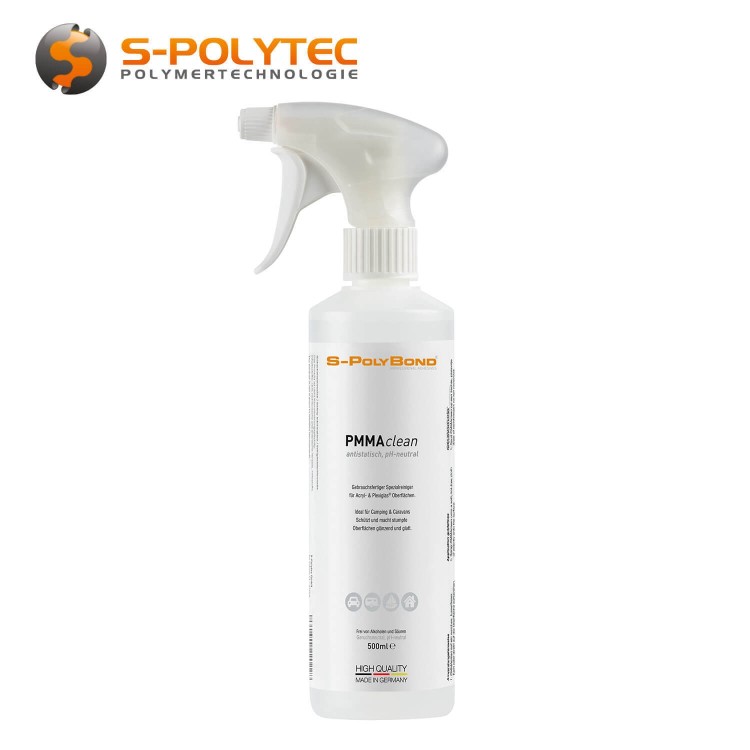
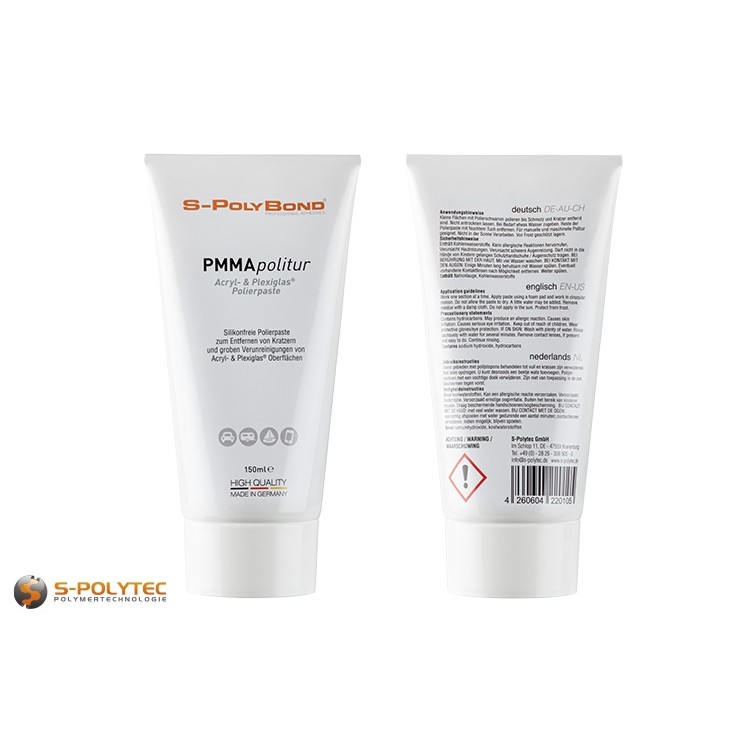
Left: S-Polybond PMMAclean for cleaning before polishing. Right: S-Polybond PMMApolitur for polishing, smoothing and restoring smooth acrylic glass surfaces.
Which method suits which type of damage?
- Removing minor scratches from acrylic glass: Polish by hand with a soft cloth.
- Polishing a matt acrylic glass pane: Polish by hand or with a machine, depending on the size of the surface.
- Restoring the clarity of acrylic glass: Clean first, then treat with a suitable PMMA polishing paste.
- Polishing acrylic glass with a machine: Use a low speed, a soft polishing pad and minimal pressure.
- Deep scratches or sanding marks: Preliminary sanding followed by polishing may be necessary. Always test the method on an offcut first.
Polishing acrylic glass by hand
If only individual areas, minor scratches or slightly matt patches are affected, polishing by hand is often sufficient. This method offers excellent control and is well suited to acrylic glass protective screens, displays, covers, showcases and smaller sheets.
Step by step – polishing acrylic glass by hand
- 1. Remove dust and dirt from the acrylic glass using water and a suitable cleaner.
- 2. Apply a small amount of S-Polybond PMMApolitur to a soft, lint-free cloth.
- 3. Work on the affected area using light pressure and circular movements.
- 4. Do not continue rubbing with pressure once the polishing paste has been worked away.
- 5. Remove any residue with a clean, soft cloth.
- 6. Check the result under oblique light.
- 7. Carefully repeat the polishing process if necessary.
Practical tip: It is better to complete several short polishing passes with little pressure than one pass with excessive force. Too much pressure generates heat and can damage the surface.
Polishing acrylic glass with a polishing machine
A polishing machine can be useful if a larger acrylic sheet has become matt or needs to be restored evenly. Examples include larger protective screens, caravan windows, transparent covers and technical viewing panels.
Acrylic glass is more sensitive to heat than glass. The machine must therefore not remain in one place for too long. Overly aggressive machine polishing can produce streaks, holograms or local optical changes. Work slowly, cleanly and with controlled pressure.
What should you consider when machine polishing?
- Use a low speed: Excessive frictional heat can affect the appearance of acrylic glass.
- Use a soft polishing pad: Pads that are too hard can cause new marks.
- Apply minimal pressure: The machine should polish, not sand.
- Keep moving: Do not remain in one place, as this can cause heat to build up.
- Inspect the surface regularly: Allow it to cool and check the result under oblique light.
- Test first: For high-quality visible surfaces, always begin on an offcut or at the edge.
Application test – PMMA can be polished extremely well
Practical test: During the development and application testing of the acrylic glass polishing paste, we examined how effectively superficial sanding marks could be removed from PMMA. A fine 3,000-grit sanding pattern was applied to a PMMA pane and then polished.
The treated area had a diameter of approximately 10 cm. It was polished for one minute using a rotary machine and a medium-firm polishing pad with a diameter of 80 mm. The surface was then inspected under critical lighting so that even fine residual marks remained visible.
The result on PMMA was rated as perfect in the test. In a further test, the 3,000-grit sanding pattern on PMMA was polished out completely within one minute. The test therefore demonstrates that smooth acrylic glass or PMMA can respond extremely well to a suitable polishing paste when the sanding marks are superficial.
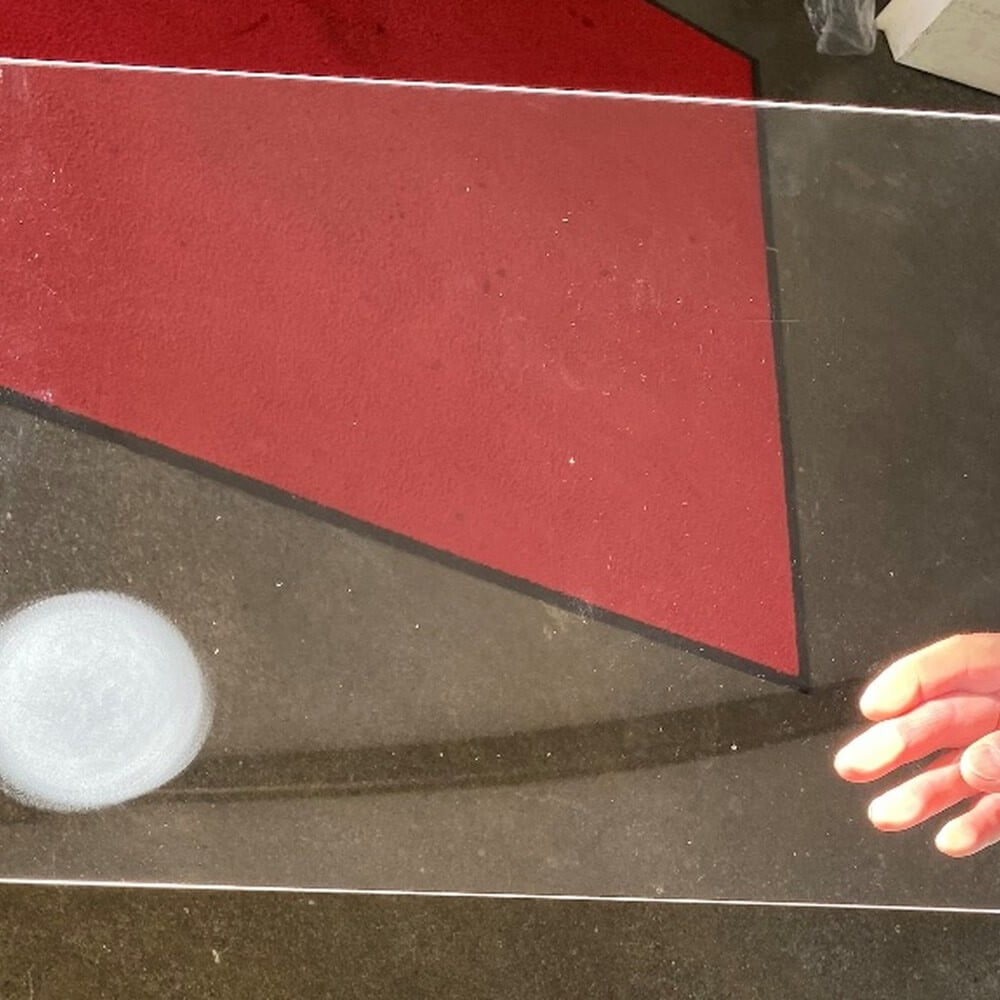
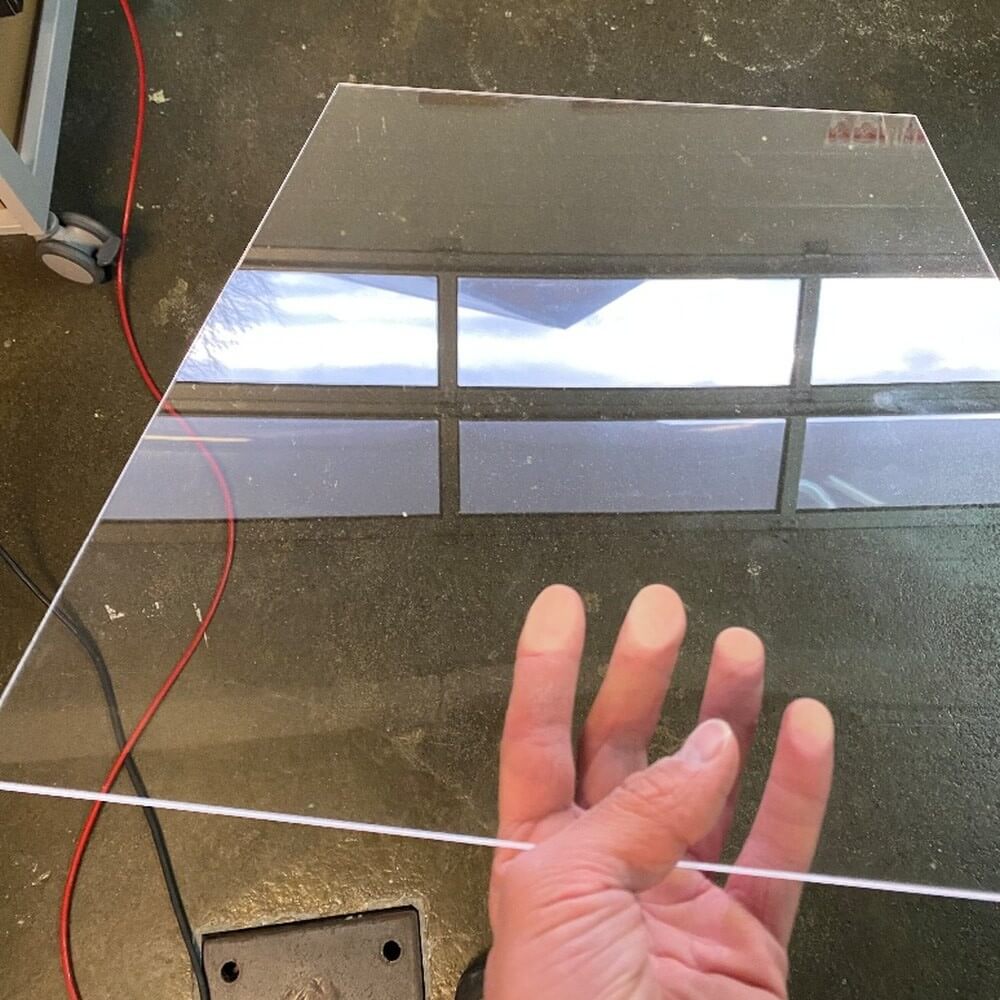
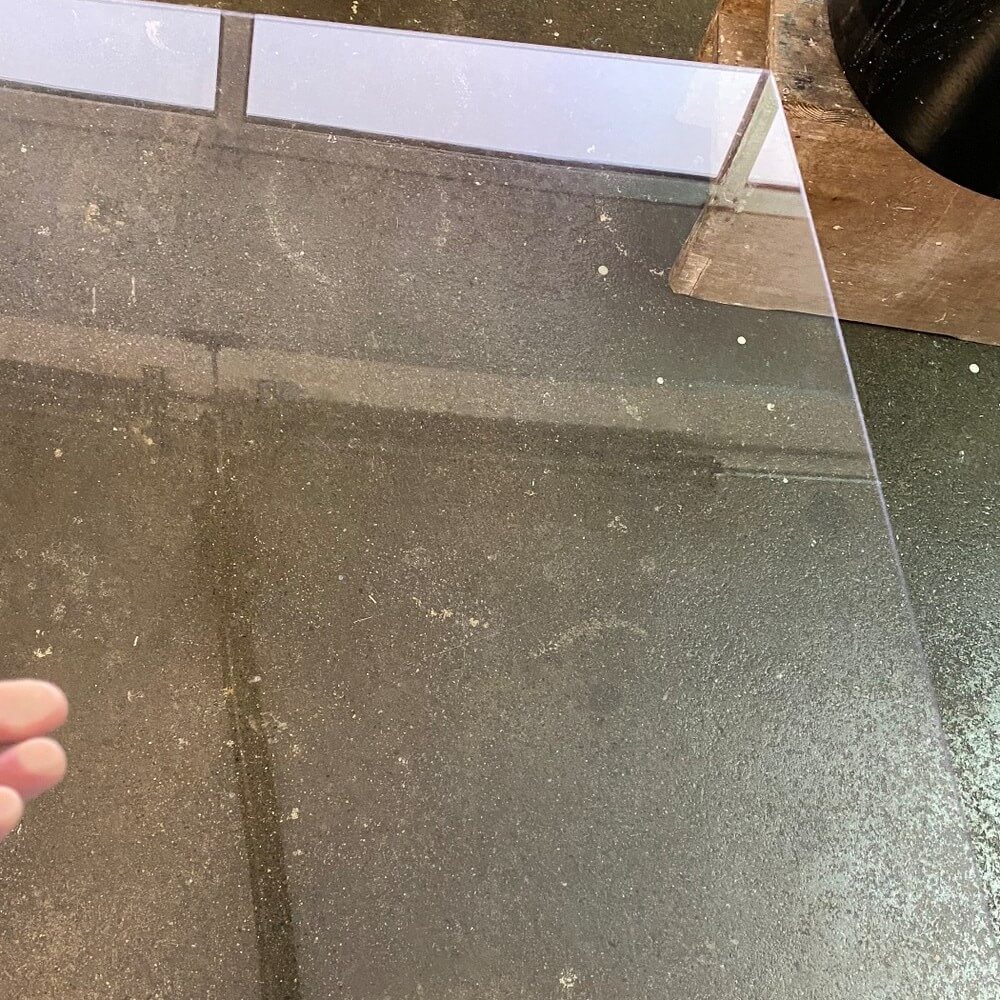
The images show the PMMA application test: the fine 3,000-grit sanding pattern before polishing, the result after polishing and the completely polished-out sanding pattern.
In practical terms, this means that fine scratches, matt areas and light sanding marks on PMMA can often be visibly improved. Thorough cleaning, a clean surface and controlled processing with minimal pressure and without excessive heat are essential.
The result will always depend on the depth of the damage, the condition of the surface and the method used. For high-quality visible surfaces, the process should therefore first be tested on an offcut or in an inconspicuous area.
Typical applications – which acrylic glass surfaces can be polished?
Acrylic glass is used wherever a clear, well-maintained appearance is important. The following examples show the surfaces for which polishing acrylic glass is particularly worthwhile in practice.
Polishing acrylic glass caravan windows
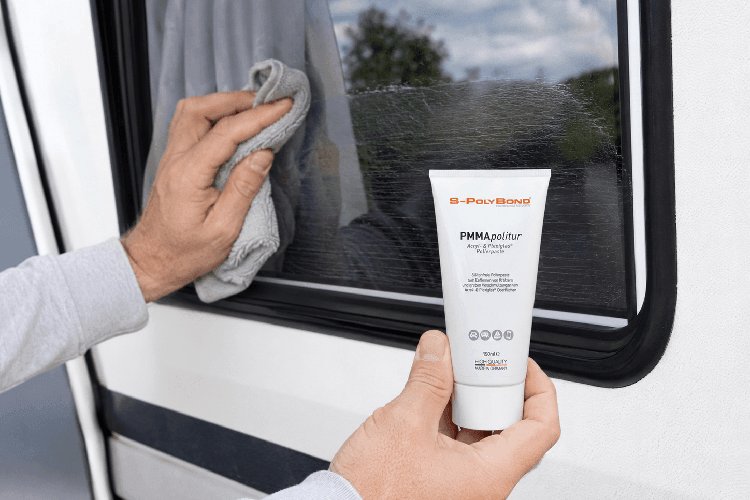
Caravan and motorhome windows can become matt over time as a result of dust, cleaning, sunlight and weather exposure. An acrylic glass polishing paste can reduce fine wiping scratches and help restore a clearer view.
Polishing acrylic glass protective screens
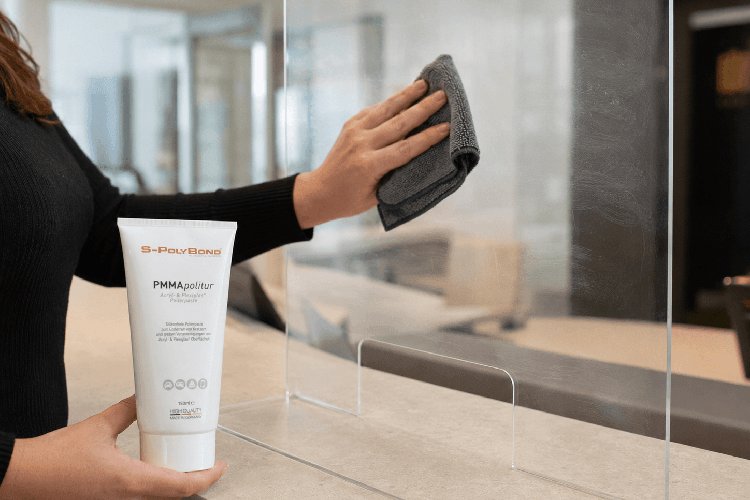
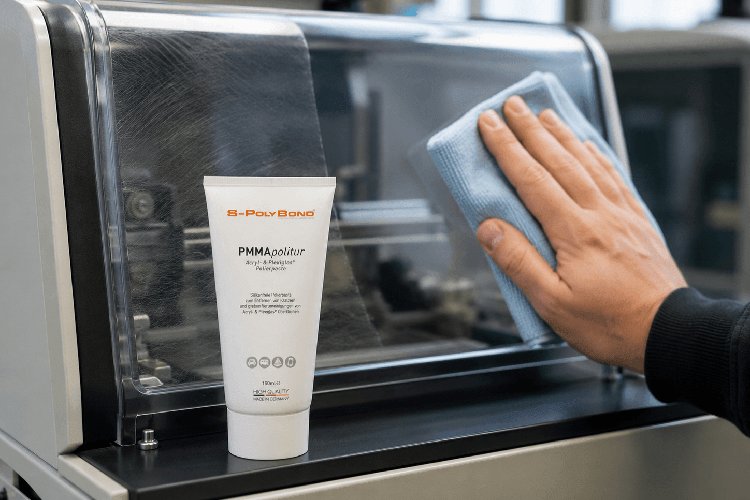
Protective screens, hygiene screens, machine viewing panels and transparent partitions are touched and cleaned regularly. Fine wiping scratches on smooth acrylic glass can often be treated effectively with a polishing paste.
Polishing acrylic glass displays and covers
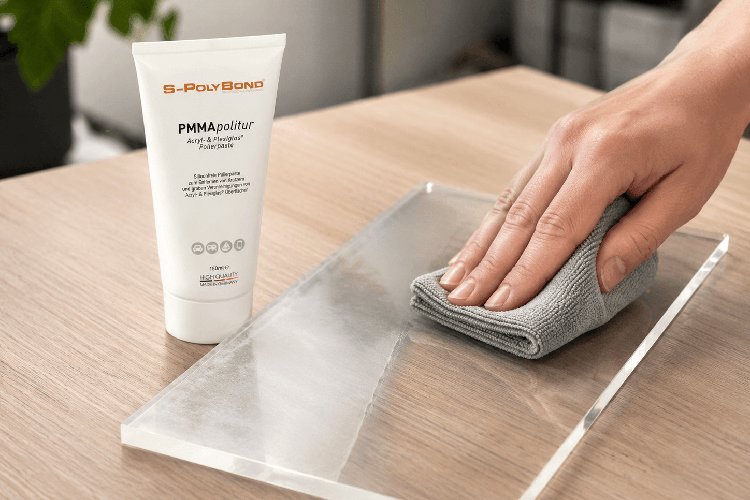
Displays, instrument covers, viewing windows and hoods should look clear and well maintained. Careful polishing by hand is usually the best option for superficial scratches.
Restoring the clarity of a matt acrylic glass pane
If an acrylic glass pane appears dull or slightly cloudy, this is often caused by fine surface marks or incorrect cleaning. Thorough cleaning removes films of dirt, while the polishing paste smooths fine surface marks and restores greater clarity.
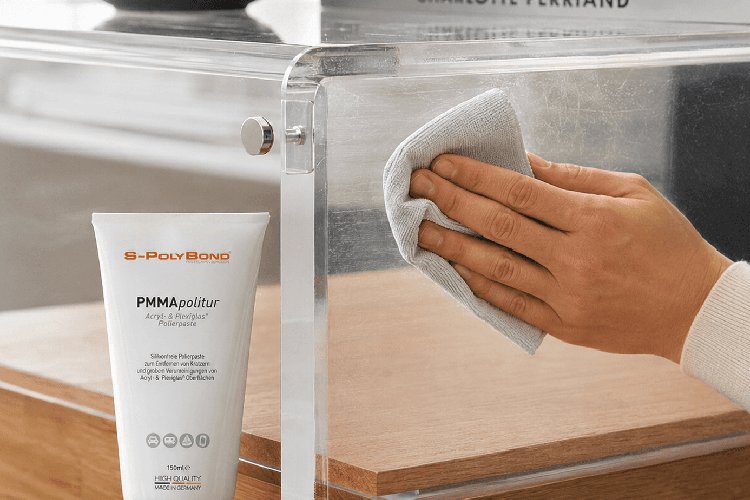
Restoring acrylic glass used in furniture
Surface marks are particularly noticeable on showcases, shelves, covers and design elements. Minor scratches can often be polished out as long as the surface is smooth and uncoated.
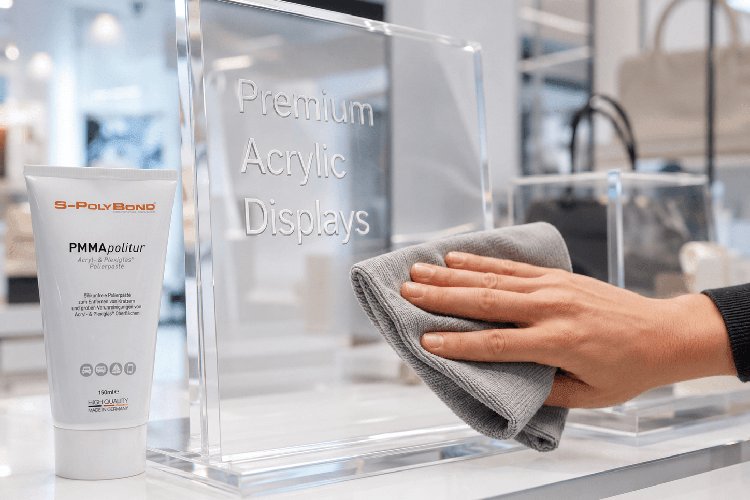
Polishing acrylic glass advertising displays
Advertising displays, stands, signs and brochure holders made of acrylic glass should retain a high-quality appearance. A clear surface with fewer scratches draws attention back to the product, sign or display.
Polishing acrylic glass edges
Not only the surface but also the edge can be important to the appearance of acrylic glass. Saw-cut or milled acrylic glass edges often look more matt than the smooth sheet surface. If the edge remains visible, polishing it can significantly improve its appearance.
Edges generally need to be finely sanded before they are polished. The edge is smoothed in several stages and then polished to a shine with a suitable paste. This requires some experience because edges can heat up quickly or be treated unevenly.
Note: If a particularly clear edge is required, laser cutting can provide a high-quality visual solution depending on the material and design. For particularly clean cut edges, S-Polytec also offers laser-cut acrylic glass with clean cut edges.
Common mistakes when polishing acrylic glass
Many polishing problems are caused not by the acrylic glass itself but by incorrect preparation or overly aggressive processing. Treating acrylic glass in the same way as glass can create new scratches, streaks or heat marks.
- Wiping while dry: Dust particles can cause new scratches.
- Using the wrong cloths: Rough or hard cloths can damage the surface.
- Applying too much pressure: This generates heat and can leave optical marks.
- Using an excessive speed: Acrylic glass can become too hot locally.
- Using an unsuitable polish: Products that are too coarse can cause holograms or new scratches.
- Polishing satin surfaces: The matt texture can become glossy or patchy.
Not recommended: Household remedies such as toothpaste are not the best choice for acrylic glass. Their abrasive effect is difficult to assess and can produce uneven results depending on the product. It is better to use a polishing paste designed for acrylic glass or PMMA.
Polish or replace – when should acrylic glass be replaced?
Not every acrylic sheet can be restored to a good condition by polishing. Replacement is usually more sensible than a time-consuming attempt at polishing if there are deep cracks, stress cracks, broken corners or severely weathered material.
If the sheet is severely deformed, heavily yellowed, coated or textured, you should also consider carefully whether the desired result is realistic before polishing. Particularly for visible components, a new sheet may be the better option both visually and economically.
S-Polytec offers suitable acrylic sheets cut to size. Select the design, thickness and colour that suit your application and configure the sheet directly online.
Caring for acrylic glass correctly after polishing
Acrylic glass should continue to be cleaned and cared for gently after polishing. This keeps the surface clear for longer and reduces new scratches. Dirt should not remain on the surface permanently and dust should not be rubbed away while dry.
- Clean regularly: Do not allow dirt to remain on the surface.
- Do not wipe while dry: Remove dust with water first.
- Use suitable cleaners: Do not use aggressive household cleaners or scouring agents.
- Use soft cloths: Do not expose the surface to hard or rough materials.
- Treat new scratches early: Minor surface marks are usually easier to treat than heavily damaged areas.
A material-compatible acrylic glass cleaner is suitable for regular care. If matt areas or minor scratches develop, a suitable PMMA polishing paste can also be used.
Polish or buy a new acrylic sheet?
In many cases, acrylic glass can be polished extremely well if the damage is superficial and the correct polishing paste is used. Minor scratches, matt areas and dull surfaces can be improved considerably. Thorough cleaning, a suitable PMMA polishing paste and careful processing without excessive pressure or heat are essential.
To restore smooth acrylic glass surfaces, we recommend combining S-Polybond PMMAclean for cleaning with S-Polybond PMMApolitur for polishing. If the sheet is too badly damaged or a new size is required, S-Polytec offers acrylic sheets cut to size.
Frequently asked questions about polishing acrylic glass
Can acrylic glass be polished?
Yes, smooth acrylic glass can be polished. A suitable acrylic glass polishing paste can improve fine scratches, matt areas and dull surfaces in particular. Deep scratches, cracks and stress cracks cannot simply be polished away.
How can I make acrylic glass clear again?
If acrylic glass appears matt or dull, it should first be cleaned using a material-compatible method and then treated with a suitable PMMA polishing paste. This can often significantly reduce fine surface marks.
How can scratches be removed from acrylic glass?
Minor surface scratches can be polished out by hand using acrylic glass polishing paste and a soft cloth. For larger surfaces, a polishing machine with a low speed and a soft polishing pad can be used.
Can acrylic glass be polished with toothpaste?
Toothpaste is not recommended because its abrasive action and ingredients vary considerably between products. A polishing paste specifically designed for acrylic glass or PMMA is the better choice.
When should acrylic glass be replaced rather than polished?
Acrylic glass should be replaced if it has cracks, stress cracks, severe deformation, broken corners or deep scratches. In these cases, a new acrylic sheet cut to size is usually the better solution.